First, let's address the obvious: photographers and video editors were not the intended audiences for the revamped 24-inch iMac. It's a Mac designed for families that places much more emphasis on visual taste than Adobe Premiere Pro performance. Despite this, it's undoubtedly the greatest entry-level Mac for anyone pursuing their artistic interests. Not only has performance improved.
The system does not simply support running native iOS and iPadOS applications. It's not just the new, highly advanced picture signal processor; it's also the CPU's ground-breaking efficiency, which has allowed Apple to design a slender, elegant, and distinctly different iMac chassis.
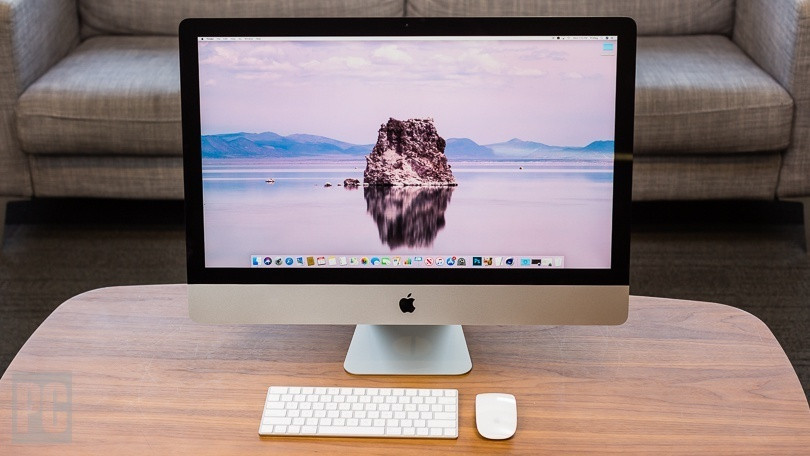
But there are other significant changes in addition to the redesign and the M1 chip from Apple. Along with changing the screen size from 21.5 to 24in and adding additional colours to the previously relatively dull palette, Apple also trimmed the bezels and improved the speakers.
Accessories like the keyboard and mouse are automatically linked with the computer out of the box. Finding a spot for the lean body and plugging in the magnetic power wire are the only requirements.
It's one of the simplest setup processes available, and (pardon me for using this overused expression) it just works. As Apple promotes this as a computer that the entire family can use, this approachability—which is undoubtedly enhanced by the aesthetics—is crucial.
Build, design, and usefulness
This iMac is available in seven different colours in addition to its size. Green, pink, orange, purple, yellow, and the drab silver we all know and love is among the available colours. This model is a flat slab, measuring around 11mm thick across the whole chassis, as opposed to the prior iMac's structure, which slightly bulged out at the back from extremely thin edges.
The overall impression is of a more elegant and slender form that is more in line with other devices in Apple's current range, despite the edges being, perhaps unexpectedly, thicker than those of its predecessor.
Fortunately, some of these design components have advantages. The whole area behind the screen was set aside for sizable air chambers that amplify the sound produced by the iMac's five speakers because of the enormous chin.
This enables the iMac to create more sound and sound of higher quality than you might anticipate given its size. It can compete with some high-end Bluetooth speakers at maximum loudness.
Although Apple claims that the M1's image signal processor enables better clarity, noise reduction, dynamic range, and intelligent exposure, the webcam is the same 1080p camera found in the 27-inch Mac. A privacy shutter to complete these upgrades would have been lovely, but alas. The visual quality is still rather decent. It is unquestionably superior to other Mac webcams.
Performance wise the 24-inch iMac is very equivalent to any other M1 Mac that has active cooling (internal fan, for example). Its performance will be comparable to that of the M1 MacBook Pro and M1 Mac Mini.
It has an 8-core CPU that can operate at rates of up to 3.2GHz, a 7- or 8-core GPU, and either 8GB or 16GB of RAM. 16GB of RAM and the 8-core GPU model were provided to us. The iMac includes a fan to disperse heat as the Air does, allowing it to squeeze out and sustain a small bit more power for demanding workloads.
And it is the main reason why, despite its strength, this iMac is largely aimed at the family market. Because it demands more money from you in exchange for doing less. When you use an iMac in conjunction with other Apple products, it performs at its best.
Thanks to the universal clipboard, it always seems magical when I can copy text from my iPhone and paste it on the iMac. Whether or not every member of the family owns an Apple device, the new iMac is a fantastic small device that succeeds in its simplicity.
Could Apple have made this iMac more useful? No doubt. The M1 iMac 24-inch is quicker, more streamlined, and smaller than the previous 21.5 model. It also has better speakers, Touch ID, and more colour options, and it costs a fair amount less.
But some things lessen its allure. The M1 chip's performance over desktop CPUs does not exactly increase by the same amount as it does for mobile processors, to start. We refer to it as the greatest "starter" Mac for creatives because of this. Thanks to the M1 chip's strength, the 4.5K display's excellence, and a favourable price/performance ratio.
Smart consumers will want to start by thinking about their priorities. If you want mobility, the M1 MacBook Pro is a good option. The wise choice is an M1 Mac mini with a colour correct 27- or 32-inch display if you want a bigger screen and more connectors. You can buy your iMac and any other Apple items you desire at NextStore.